In Praise of Gen X
We grew up analog, built our lives in a digital world and learned to adapt to almost everything. Maybe that's exactly what we need for what comes next.
Do you remember Reality Bites?
It wasn't actually my favorite movie of that era. But it's hard to deny that something about it landed.
We were young. Adulthood was arriving, although most of us weren't entirely sure what we were supposed to do with it. Careers were beginning. Relationships were complicated. There was this tension between wanting a meaningful life and realizing that eventually somebody had to pay the rent.
I preferred Before Sunrise.
Two strangers meet on a train and spend a night walking through Vienna talking about everything that seems terribly important when you're young: love, relationships, who you might become, whether this person you've just met could somehow change the direction of your life.
I understood that.
I'd had my own early brush with the one who got away. I'll never know what would have happened if things had gone differently. Maybe nothing. Maybe everything.
What I remember is the intensity of those conversations when I was young. The feeling that you could meet someone almost anywhere and discover an entire world inside another person.
My own love story, when it came, wasn't nearly as cinematic. But those early experiences taught me something about the kind of connection I wanted. And I found it.
Love mellows as you get older. It changes. That's not necessarily a bad thing. But sometimes it's fun to revisit the young woman you were and remember when all of the possibilities were still laid out in front of her.
Here's something that occurred to me recently.
We may have been the last generation of women who could meet someone in a bar, on a train or online and have all three feel perfectly normal.
That may say more about Gen X than all the latchkey-kid memes ever could.
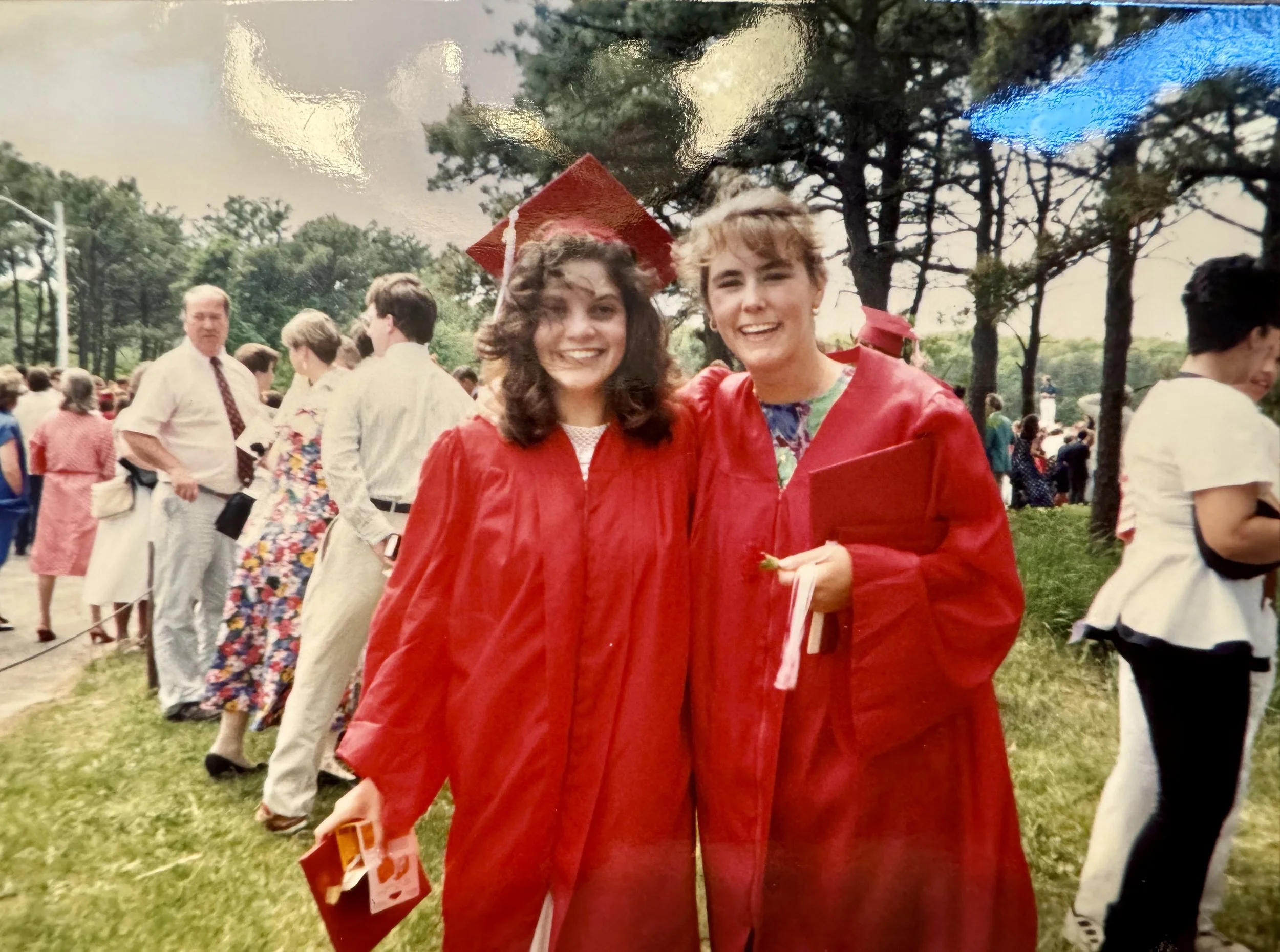
We learned to take care of ourselves
I was a quintessential latchkey kid.
From the time I reached school age until I was about ten, taking care of myself was simply part of life. Sometimes there were after-school programs when we lived in the city. Other times I learned how to be home on my own.
Then my mother remarried.
Within a relatively short period, I had three new siblings. My parents continued to work, and I became something of a second mother. I learned how to take care of other people, too.
Looking back, I can see the line running through my life much more clearly than I could then.
I became the fixer in my family.
Eventually, I made a career out of it.
For much of my professional life, I've helped Fortune 100 companies prepare for, respond to and recover from situations of extraordinary stress. The circumstances are obviously very different, but the instinct is strangely familiar.
Something has happened. What do we do? Who needs help? How do we keep things moving?
Maybe that's why the standard description of Gen X as fiercely independent resonates with me but doesn't quite go far enough.
Some of us became capable because capability was expected of us.
There is a difference.
We lived on both sides of the line
Every generation has experiences that belong particularly to it. Ours happened to arrive at an extraordinary hinge in history.
We had childhoods in an analog world and built our adult lives in a digital one.
We remember phones attached to walls. Waiting for someone to call. Albums and cassettes and CDs. Magazines arriving in the mail. Going to the mall without anyone being able to track exactly where we were.
I remember watching MTV launch on August 1, 1981.
Both of my parents worked for our local cable company, which meant we had free cable at home. So I was watching that day.
I remember knowing, even then, that something special was happening.
Video Killed the Radio Star came on, and suddenly music wasn't just something we listened to. We could see it. The musicians, the clothes, the hair, the attitude.
It felt completely new.
MTV wasn't available everywhere yet, so not everyone could see what we were seeing. But those of us who could were watching a new kind of culture arrive in real time. Sky HISTORY TV channel
That's something I sometimes miss about growing up when we did: the shared cultural moment.
A song came on MTV, a movie opened, a television show aired, and the next day people were talking about it. You didn't need to follow the right account or have an algorithm decide whether you would see it.
Social media has given us access to more culture than I could ever have imagined sitting in front of that television in 1981. But it has also fragmented it.
We can all be looking at our screens at exactly the same time and experiencing completely different worlds.
Then everything changed.
Personal computers. Email. The internet. Cell phones. Social media. Smartphones.
And somewhere along the way, work followed us home.
We didn't learn the digital world as children. We learned it while we were building careers, relationships, families and lives.
That distinction interests me much more than whether we drank from garden hoses.
We had a culture of our own
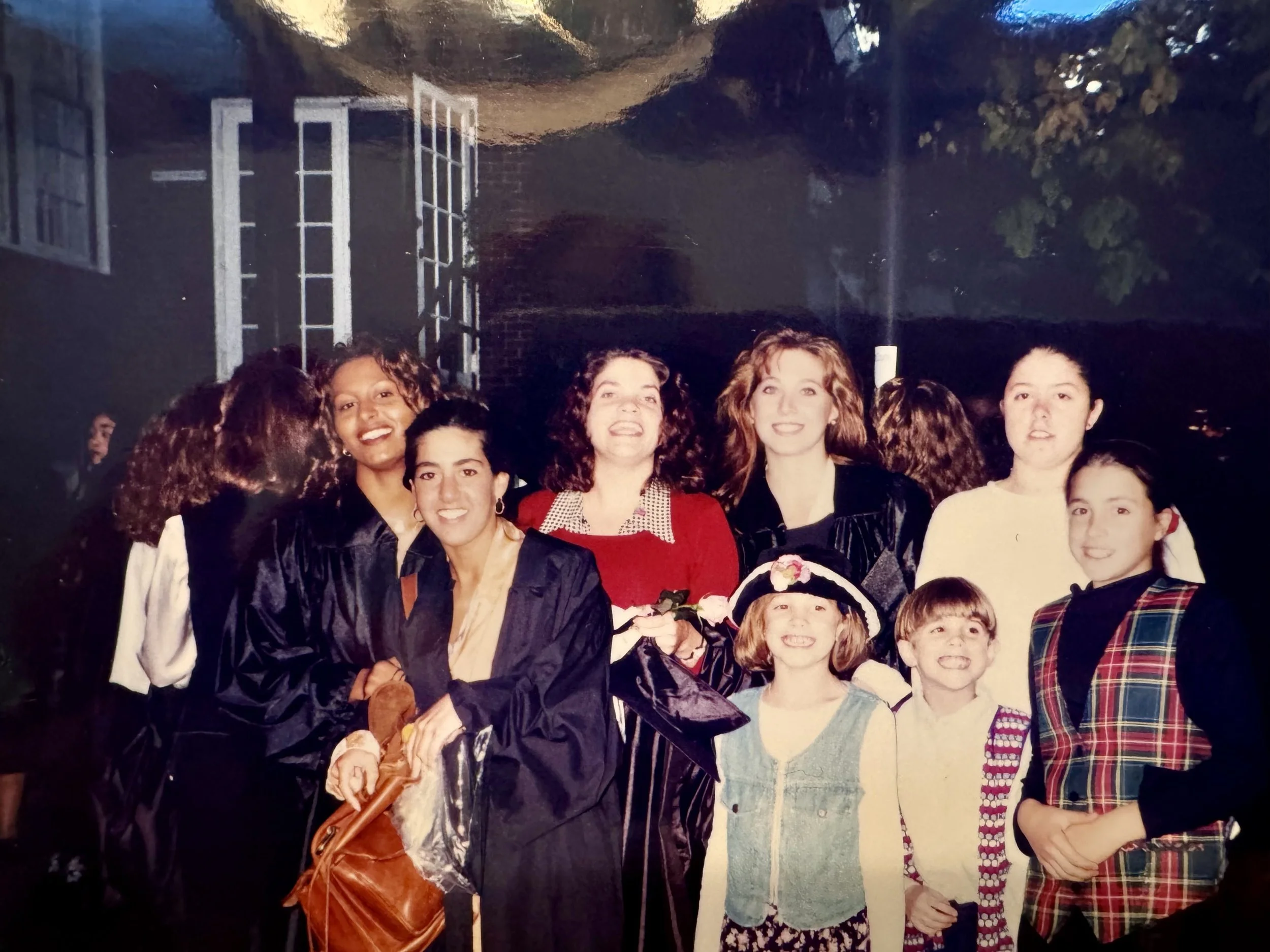
And what a culture it was.
I remember discovering R.E.M. in college with friends.
We would hang out and listen to Losing My Religion, and it felt like a revelation. There was something wonderful about discovering music that way. Someone found something. They played it for someone else. Pretty soon it belonged to all of you.
Movies opened another door for me.
I discovered films outside the American mainstream: Krzysztof Kieślowski's Three Colors trilogy, Zhang Yimou's Raise the Red Lantern, Wong Kar-wai's Chungking Express, Howards End, Indochine and, later, Life Is Beautiful.
I didn't think of it as cultivating a taste in international or independent cinema.
I was curious.
You heard about something from a friend. You read about it somewhere. You wandered into an art-house theater or record store. Sometimes you loved what you found. Sometimes you didn't.
Your taste had room to surprise you.
Fashion was another kind of discovery.
I loved the minimalism of the '90s and, like a lot of women, I followed Carolyn Bessette-Kennedy.
There was something about the restraint. The clean lines. The jeans. The simple coats. The absence of anything that looked as though it were trying too hard.
And then there were the supermodels.
Linda. Christy. Naomi. Cindy. Claudia.
They weren't called content creators. They were supermodels.
Beauty changed almost as quickly as the music did. Big hair gave way to something quieter. Brown-red lipstick replaced some of the brighter colors we'd worn before. Clothes became simpler.
We experimented.
Some of it should absolutely remain in the past. I have photographic evidence.
But I'm grateful that most of that experimentation happened before every questionable haircut, outfit and romantic decision could be documented forever online.
We got to try on different versions of ourselves without turning them into content.
Apparently, the '90s aren't finished with us yet
The funny thing is that so much of it looks current again.
Fashion is having another serious '90s moment in 2026, particularly the clean-lined minimalism associated with Carolyn Bessette-Kennedy. Vogue has recently revisited everything from her Levi's and pared-back tailoring to bias-cut dresses and the broader return of '90s silhouettes. Vogue
I'm not interested in dressing exactly as I did at 25.
But high-rise jeans, subtle bootcuts, bias-cut silk, restrained tailoring and a brown-red lip? I'll happily take those back.
Maybe this revival appeals to me because the best '90s minimalism wasn't really about chasing trends.
It was about knowing when enough was enough.
That idea feels even more useful to me now than it did then.
The '90s, edited for now
A few current pieces capture the feeling without making us look as though we're reenacting 1996.
For denim, I like the Good American Good Petite '90s Jeans because they're actually cut for women 5'4" and under. They're relaxed and slouchier than the straight jeans I wore then, so I'd describe them as a modern interpretation rather than a replica. GOOD PETITE 90s JEANS | INDIGO1257$118.99GOOD AMERICAN
For something closer to the clean straight-leg silhouette, I'd choose a true petite straight jean instead. The important thing is the shape: clean through the waist and hip without an exaggerated trend detail.
Then there's silk. The 100% Washable Silk Slip Dress$89.90 Quince is bias-cut and made from 100% mulberry silk. It's precisely the kind of piece I mean when I talk about buying fewer, better things: simple enough that it doesn't really belong to any one decade. Lilysilk makes this on-point Elegant Alluring Cowl Neck Silk Dress as well for $159.
The Reformation Layla Silk Midi Skirt $198.00 Nordstrom gives the same idea in a skirt: bias-cut, 100% silk and uncomplicated enough to wear with a white tee, fine knit or blazer rather than saving it for an occasion.
And then there's lipstick.
Of course there's lipstick.
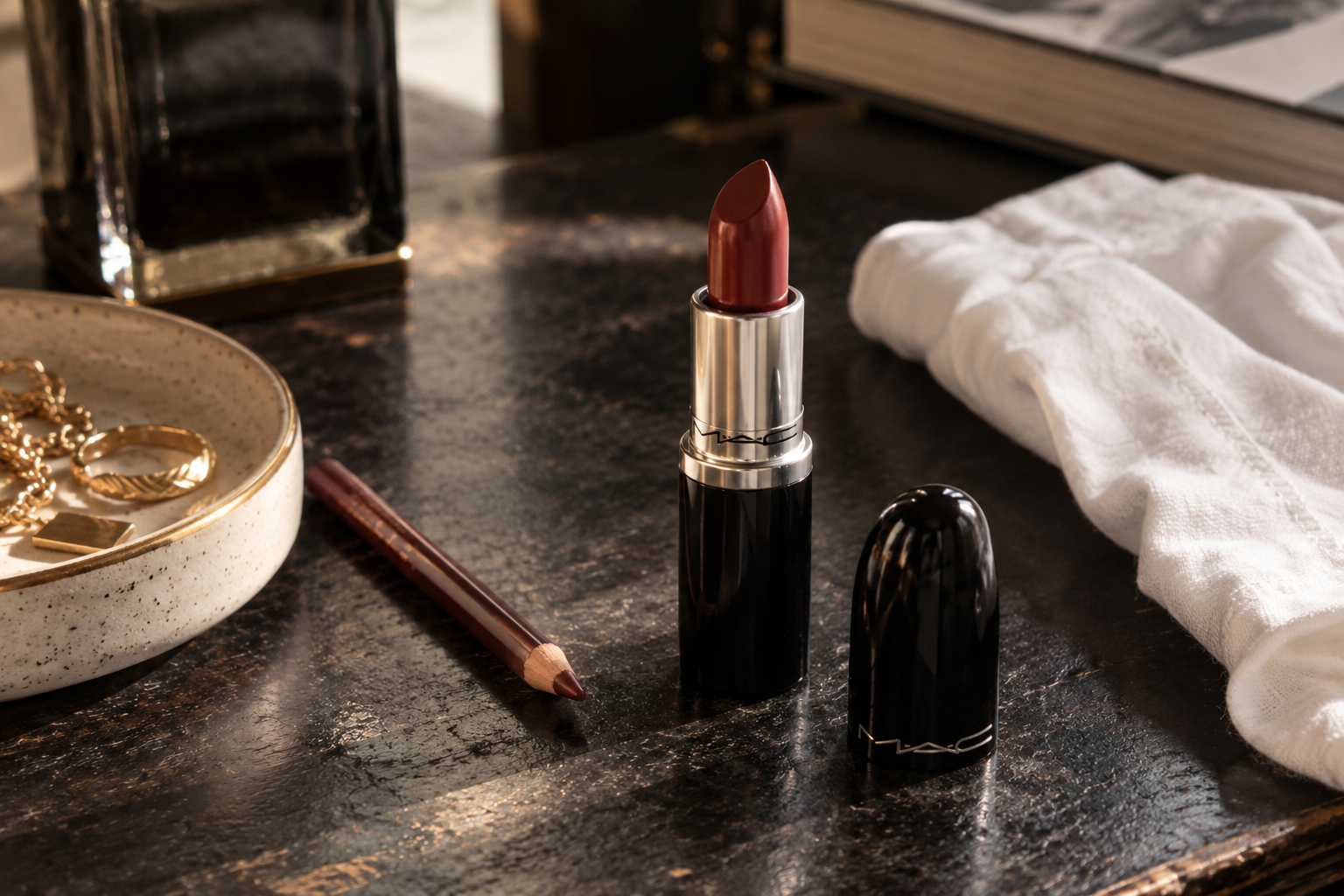
MAC Cosmetics MACximal Sleek Satin Lipstick in Paramount$20.00 Nordstrom is still around. A brown-red lip gives me the memory without requiring the rest of my face to return to 1995.
Maybe that's the way to revisit the '90s now.
Not by trying to look younger. By remembering what we got right the first time.
The world became less certain
There's a temptation to romanticize all of this.
I don't want to do that.
Our childhoods weren't universally carefree. Mine certainly taught me responsibility earlier than I might have chosen.
We grew up with the Cold War hanging in the background and the possibility of nuclear war embedded in the culture around us.
And by September 11, 2001, Gen X wasn't watching the world change as children. Using the commonly cited 1965–1980 range, we were roughly 21 to 36 years old. Pew Research Center
We had jobs. Some of us had children. We were building careers and homes and families.
Then came wars, recessions, the financial crisis, increasingly costly natural disasters, a pandemic and another enormous acceleration in technology.
It sometimes feels as though we came of age during an unusually optimistic period only to spend much of adulthood learning to live with uncertainty.
And through it, we kept going.
The generation once caricatured as slackers somehow spent the next three decades doing an awful lot of work.
Maybe we weren't slackers.
Maybe we were skeptical.
There's a difference there, too.
And the women kept going
This is the part I'm most interested in now.
The Gen X women I know are in their 50s.
Look at what we've spent the last thirty years doing.
We've built careers. Raised children. Helped aging parents. Maintained friendships and marriages. Started businesses. Managed households. Volunteered. Sat on boards. Changed jobs. Lost people. Started over.
Many of us did it while the rules for women were changing underneath our feet.
We were told we could have careers our mothers and grandmothers couldn't necessarily have.
So we did.
What nobody really explained was what would happen when all those opportunities collided with all the things women had traditionally been expected to do anyway.
We figured that out, too.
Not perfectly.
But here we are.
I think we've earned the next part
Maybe that's one reason I started The Polished Reset.
I'm not particularly interested in being told what a woman in her 50s is supposed to become.
I'm also not interested in disappearing.
I've spent decades becoming this person. Why would I suddenly make myself smaller now?
I want to talk about taking care of our bodies because we want to stay strong enough to use them. Clothes because style can still be enormously fun. Beauty without pretending we're 32.
I want to talk about work and retirement. Money. Travel. Friendship. Marriage. Purpose. What happens when ambition begins to mean something different.
I want to talk about buying less and choosing better.
Mostly, I want to talk about what we might do with another thirty years.
Maybe that's our next reinvention.
We spent our childhoods learning independence, our twenties figuring ourselves out, and a good part of our thirties and forties building.
Now we're arriving somewhere new.
I keep hearing this part of life described as slowing down.
That doesn't sound quite right to me.
I think we're becoming more selective.
About our time, our work, the people around us, what we buy and what we're willing to put up with.
We've lived long enough to know the difference.
We came of age while the world changed from analog to digital. We learned one set of rules and then watched the rules get rewritten again and again.
We adapted.
We kept going.
And now, when it comes to what our later years are supposed to look like, I think we've earned something better than another set of instructions.
We can write those ourselves.
Ashley
Founder, The Polished Reset